
How to Implement Robots in Your Irish Business: Step-by-Step Guide
A practical implementation guide for Irish businesses adopting robots. From initial assessment to go-live, learn how to successfully deploy automation.
Successfully Implementing Robots in Your Business
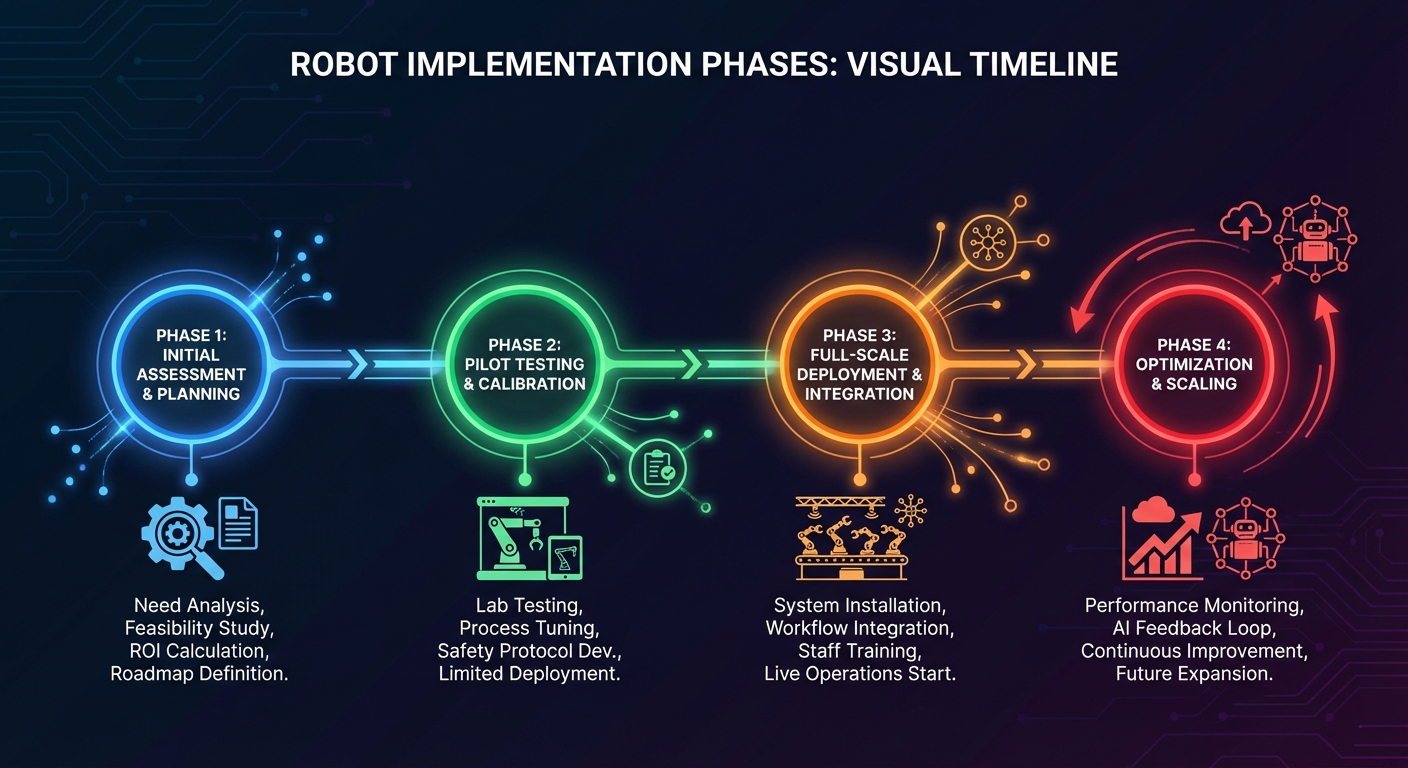
Implementing robots is a change management project as much as a technology project. Success depends on proper planning, stakeholder buy-in, and realistic expectations.
Typical Implementation Timeline:
| Phase | Duration | Key Activities |
|---|---|---|
| Assessment | 1-2 weeks | Site survey, requirements, business case |
| Planning | 2-4 weeks | Procurement, scheduling, staff preparation |
| Deployment | 1-2 weeks | Delivery, setup, integration, training |
| Optimisation | Ongoing | Fine-tuning, scaling, continuous improvement |
Success Factors:
- Clear objectives: Know what you want to achieve
- Stakeholder buy-in: Staff, management, and customers prepared
- Realistic expectations: Robots aren't magic—they need setup and support
- Proper training: Staff confident with new technology
- Continuous improvement: Monitor, measure, adjust
Common Mistakes to Avoid:
- Skipping staff consultation
- Underestimating setup time
- Expecting immediate perfection
- Not measuring baseline performance
- Choosing the wrong robot for the job
Phase 1: Assessment (1-2 Weeks)
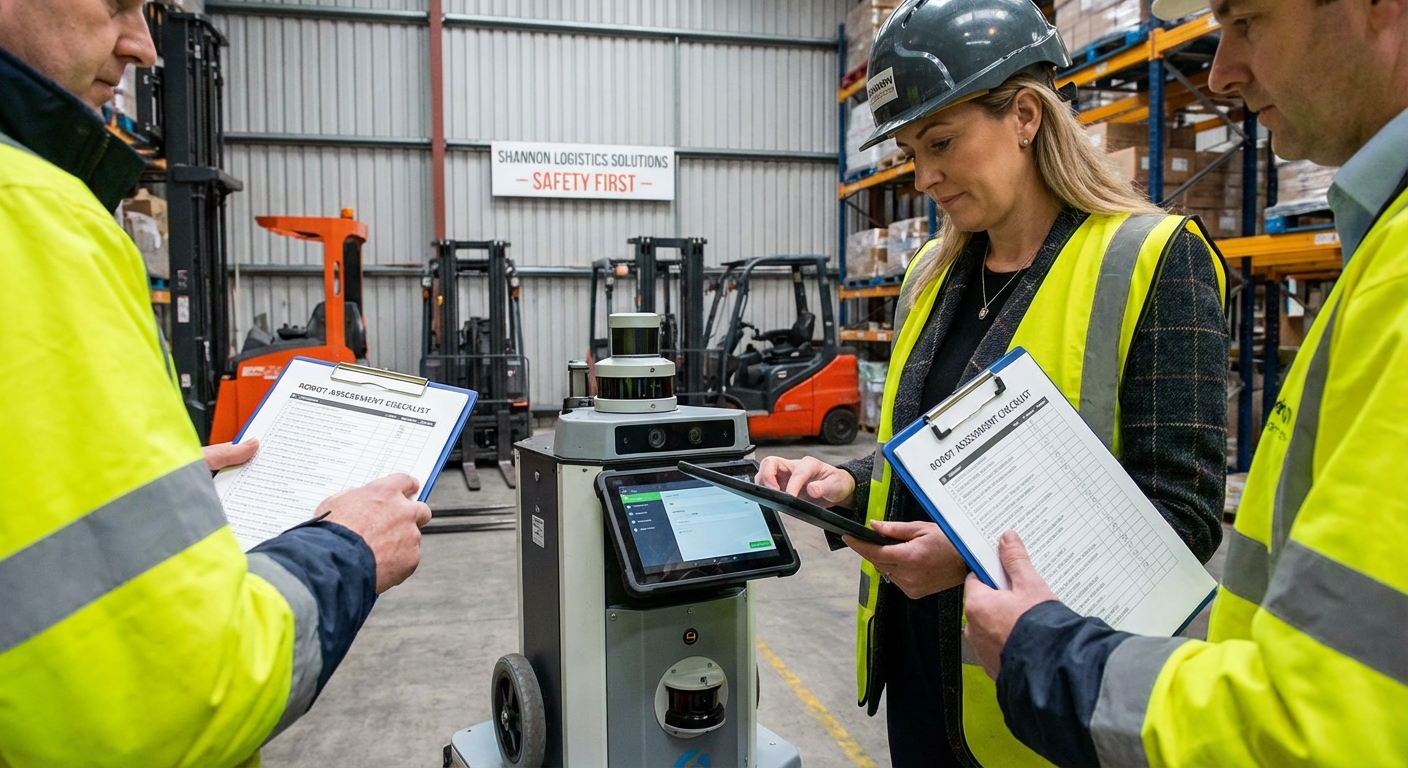
Step 1.1: Define Your Objectives
What problem are you solving? - Labour shortages - Cost reduction - Quality improvement - Service expansion - Competitive differentiation
What does success look like? - Specific metrics (deliveries/hour, clean area/day) - Quality standards - Cost targets - Timeline expectations
Step 1.2: Site Survey
Physical assessment: - Floor surfaces and conditions - Layout and obstacles - Lift compatibility - Charging location options - WiFi coverage mapping
Operational assessment: - Peak and quiet periods - Existing workflows - Integration requirements - Safety considerations
Step 1.3: Stakeholder Analysis
Who needs to be involved? - Decision makers (budget approval) - Operations managers (daily oversight) - IT team (integration, connectivity) - HR (staff communication) - Front-line staff (users) - Customers/guests (if applicable)
Step 1.4: Build the Business Case
Document: - Current costs (full picture) - Projected robot costs - Expected benefits (quantified) - Risks and mitigations - Implementation timeline - Success metrics
Rentabot.ie Assessment Support:
We provide free initial assessments including: - Site visit and survey - Robot recommendations - Cost-benefit analysis - Implementation roadmap
Phase 2: Planning (2-4 Weeks)

Step 2.1: Select Your Robot
Based on assessment, choose robot that matches: - Your specific use case - Site conditions - Budget constraints - Integration requirements
Consider: - Rental vs purchase decision - Trial period options - Scalability for future needs
Step 2.2: Prepare Your Site
Physical preparation: - Install charging station - Ensure adequate power supply - Mark any restricted areas - Clear storage space for supplies - Test and upgrade WiFi if needed
System preparation: - API access for integrations - User accounts for monitoring - Firewall rules for robot connectivity
Step 2.3: Prepare Your Staff
Communication plan: - Announce the project early - Explain why (honest about objectives) - Address concerns directly - Highlight benefits for staff - Identify robot champions
Training plan: - Who needs what level of training - Schedule training sessions - Prepare reference materials - Plan for ongoing support
Step 2.4: Prepare Your Customers
If customer-facing: - Update website and communications - Train front-line staff on explaining robots - Prepare FAQs - Plan for feedback collection
Step 2.5: Define Success Metrics
Measure before robot arrives: - Current performance baseline - Customer satisfaction scores - Staff feedback - Cost tracking
Plan to measure after: - Same metrics for comparison - Robot-specific metrics (utilisation, coverage) - Incident tracking
Phase 3: Deployment (1-2 Weeks)
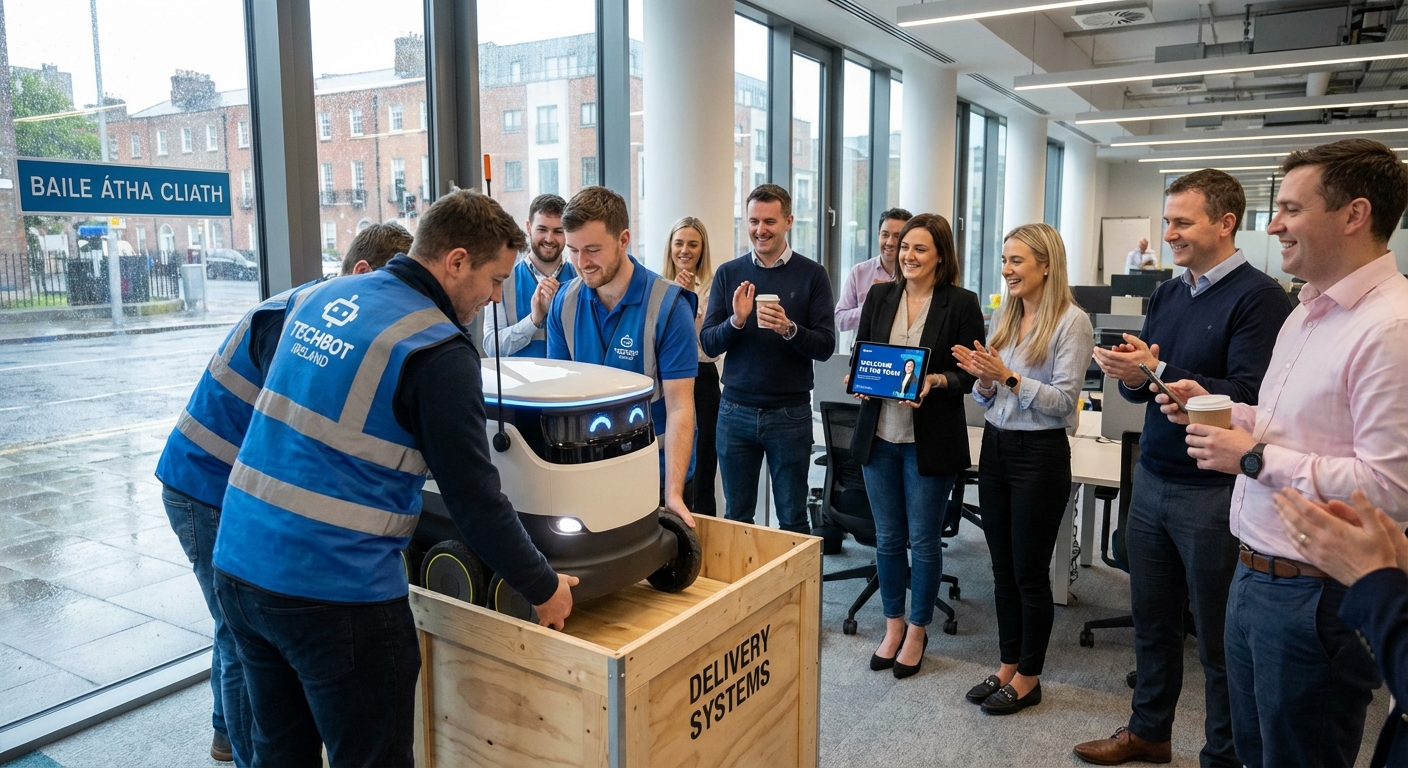
Week 1: Setup and Training
Day 1-2: Delivery and Installation - Robot delivery and unboxing - Charging station installation - Initial power-up and testing - Network connectivity setup
Day 3-4: Mapping and Configuration - Robot maps your facility - Routes and zones programmed - Integration testing - Safety feature verification
Day 5: Staff Training - Hands-on training sessions - Emergency procedures - Daily maintenance tasks - Troubleshooting basics
Week 2: Soft Launch
Day 6-7: Supervised Operation - Robot operates with close supervision - Staff practice interactions - Issues identified and resolved - Routes fine-tuned
Day 8-10: Gradual Handover - Reduce supervision gradually - Staff take ownership - Customer/guest introduction (if applicable) - Feedback collection begins
Go-Live Checklist:
✓ Robot operating reliably ✓ Staff confident with operation ✓ Emergency procedures tested ✓ Customers/guests informed ✓ Support contacts established ✓ Metrics tracking in place ✓ Feedback mechanism ready
Common Deployment Issues and Solutions:
| Issue | Solution |
|---|---|
| Navigation errors | Remap problem areas, remove obstacles |
| Connectivity drops | WiFi extender, dedicated network |
| Staff resistance | More training, address concerns |
| Customer confusion | Better signage, staff explanation |
Phase 4: Optimisation (Ongoing)

First Month: Stabilisation
Focus on: - Resolving any teething issues - Fine-tuning routes and schedules - Building staff confidence - Collecting performance data
Weekly reviews: - Robot utilisation - Issues and resolutions - Staff feedback - Customer feedback
Months 2-3: Optimisation
Analyse data to: - Identify underperforming areas - Optimise schedules for efficiency - Adjust routes for better coverage - Balance robot and human tasks
Consider: - Additional robots if justified - Extended operating hours - New use cases
Ongoing: Continuous Improvement
Monthly reviews: - Performance vs objectives - Cost tracking - Staff satisfaction - Customer satisfaction
Quarterly reviews: - ROI assessment - Technology updates - Expansion opportunities - Contract review
Scaling Up:
When to add more robots: - Consistent high utilisation (>70%) - Unmet demand during peak times - Expansion to new areas - Positive ROI demonstrated
When to add different robot types: - Different tasks identified - Complementary capabilities - New business requirements
Rentabot.ie Ongoing Support:
We provide: - 24/7 technical support - Monthly performance reviews - Software updates - Proactive maintenance - Scaling recommendations
Frequently Asked Questions
Frequently Asked Questions
In This Guide
Related Guides

Robot Rental vs Purchase: Making the Right Decision for Your Irish Business
Should you rent or buy a robot? A comprehensive financial analysis to help Irish businesses make the right decision based on their specific circumstances.
3D Printer Rental for Irish Businesses: Additive Manufacturing Guide
When renting a 3D printer makes sense for Irish businesses. From prototyping to production, understand the costs and benefits of 3D printer rental.
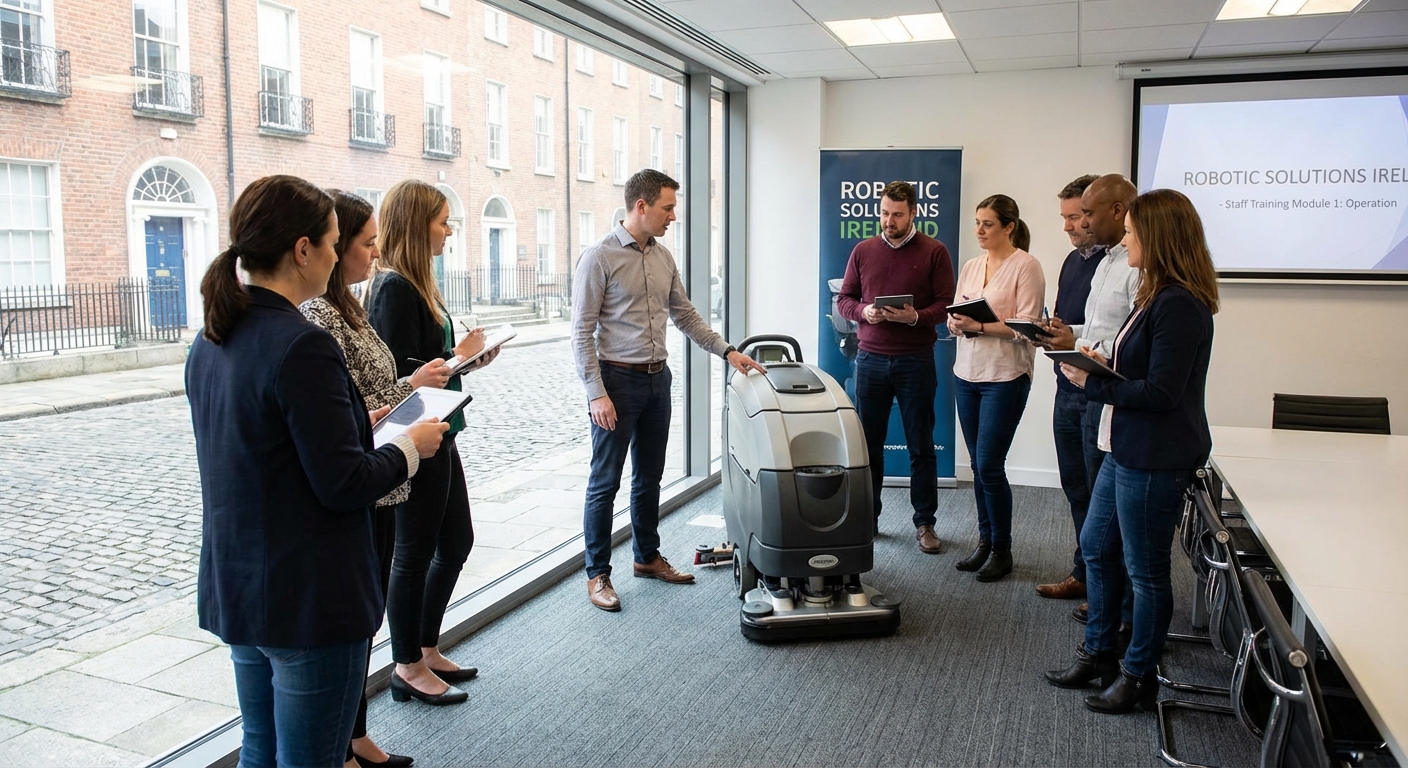
Robot Training and Onboarding Guide for Irish Teams
How to train your Irish team to work effectively with robots. Practical onboarding strategies for cleaning, delivery, security, and industrial robots.