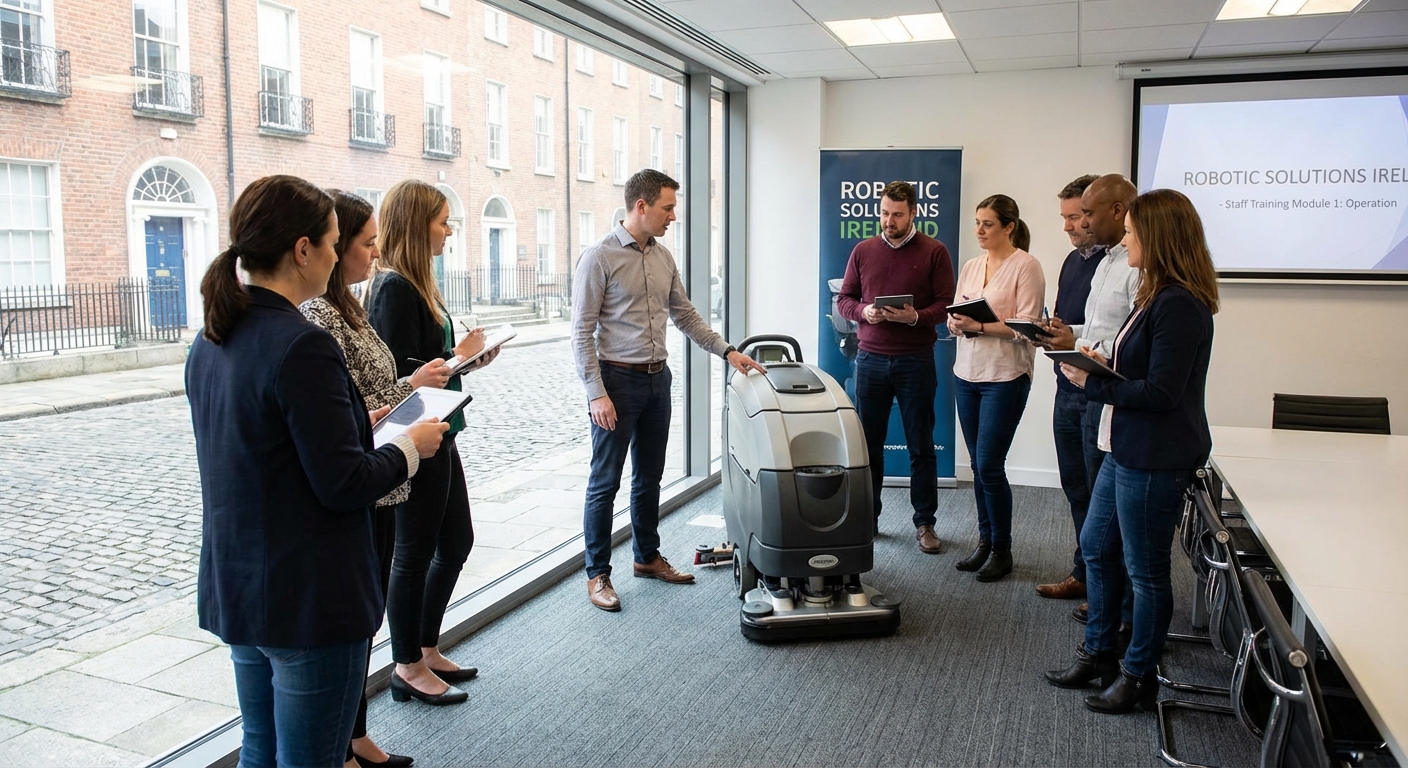
Robot Training and Onboarding Guide for Irish Teams
How to train your Irish team to work effectively with robots. Practical onboarding strategies for cleaning, delivery, security, and industrial robots.
Training Your Team for Robot Success
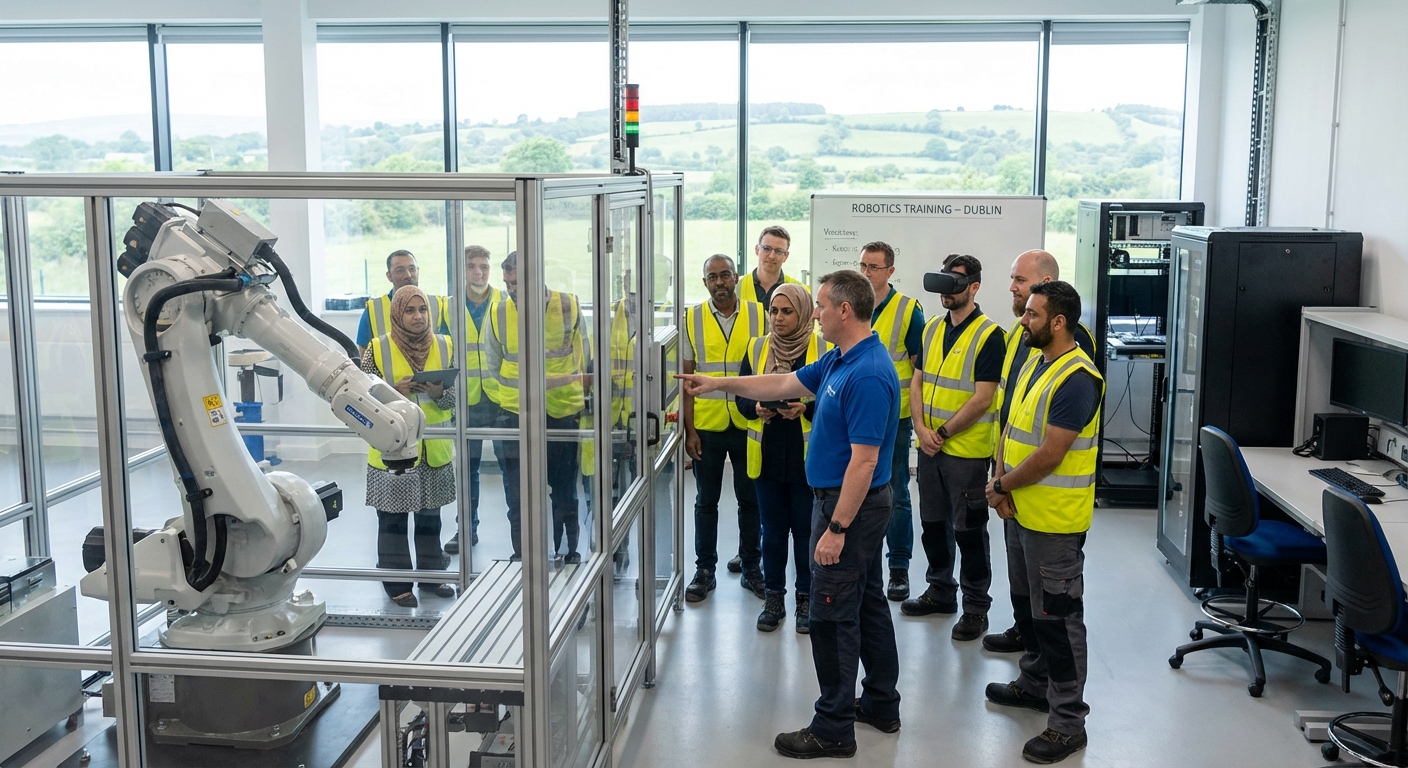
Effective training is the difference between a robot that sits unused and one that transforms your operations. Irish businesses report that well-trained teams achieve 40% higher robot utilisation.
Training Principles:
- Start with 'why': Explain the purpose and benefits
- Hands-on practice: Learning by doing, not just watching
- Build confidence: Start simple, increase complexity
- Create champions: Identify enthusiastic early adopters
- Ongoing support: Training doesn't end at go-live
Who Needs Training:
| Role | Training Level | Focus Areas |
|---|---|---|
| Robot operators | Full | Operation, maintenance, troubleshooting |
| Supervisors | Comprehensive | Oversight, reporting, escalation |
| General staff | Awareness | Safety, interaction, basic help |
| Management | Overview | KPIs, ROI, strategic use |
| Customers (if applicable) | Basic | How to interact, what to expect |
Training Timeline:
| Phase | Duration | Content |
|---|---|---|
| Pre-arrival | 1-2 weeks | Introduction, 'why', videos |
| Delivery day | 2-4 hours | Hands-on basics |
| First week | Daily check-ins | Practice, Q&A |
| First month | Weekly reviews | Advanced features |
| Ongoing | As needed | Updates, refreshers |
Training Levels Explained
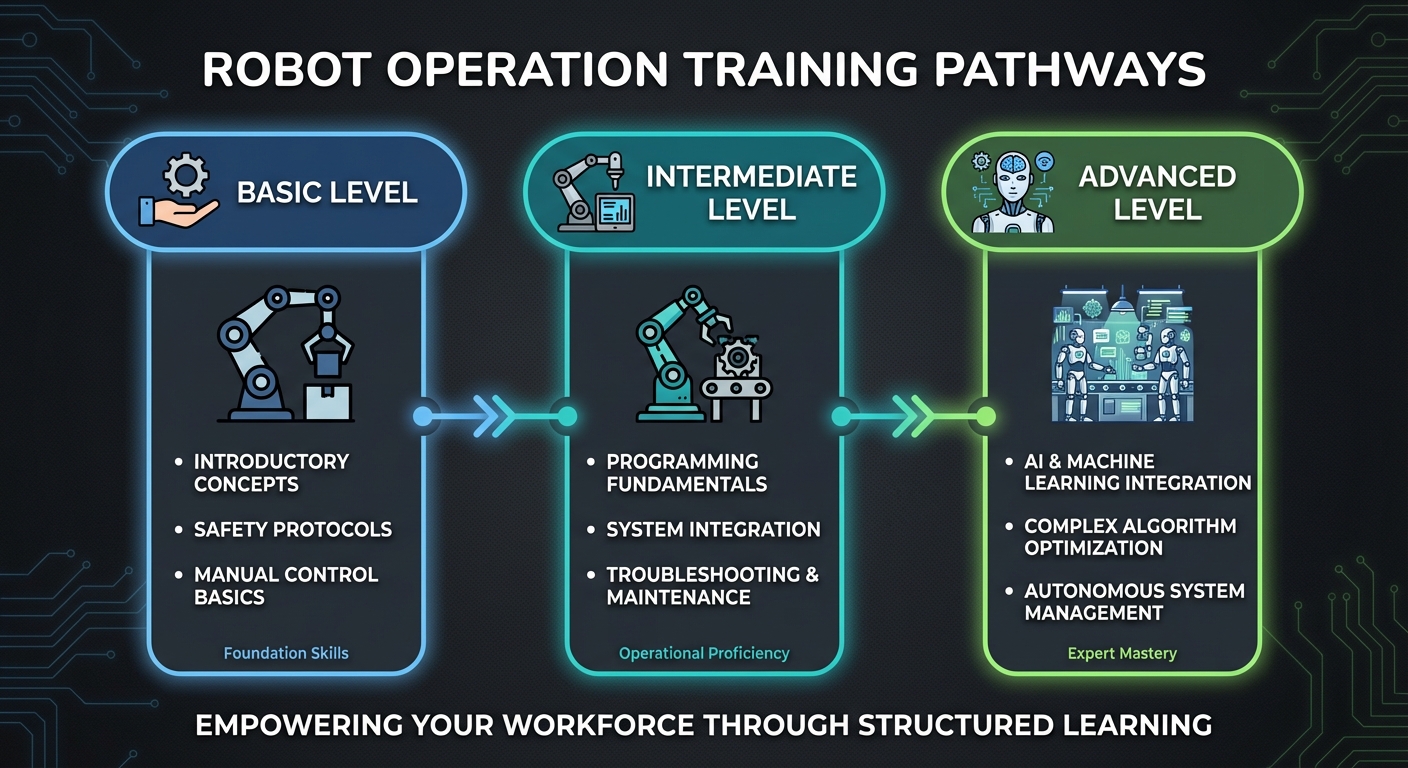
Level 1: Awareness Training (30 minutes)
For all staff who may encounter the robot:
Content: - What the robot does and why - Safety basics (how to stop it) - How to interact (or not) - Who to contact with issues
Delivery: - Brief presentation or video - Simple handout - Q&A session
Level 2: Operator Training (2-4 hours)
For staff who will operate the robot daily:
Content: - Starting and stopping procedures - Daily maintenance tasks - Basic troubleshooting - Monitoring and reporting - Emergency procedures
Delivery: - Hands-on demonstration - Guided practice - Written quick-reference guide - Competency check
Level 3: Supervisor Training (4-6 hours)
For managers overseeing robot operations:
Content: - All operator content plus: - Performance monitoring - Route/schedule changes - Escalation procedures - Staff management - Reporting and KPIs
Delivery: - Extended hands-on session - Dashboard training - Scenario exercises - Best practices discussion
Level 4: Administrator Training (1 day)
For IT or technical leads (if applicable):
Content: - System integration - Network requirements - Software updates - Data management - Advanced troubleshooting
Delivery: - Technical deep-dive - Integration workshop - Documentation review
Training by Robot Type
Cleaning Robots (Floor Scrubbers, Vacuums)
Key skills: - Tank filling and emptying - Brush and filter maintenance - Route adjustments - Spot cleaning vs autonomous mode
Common mistakes: - Overfilling tanks (causes spills) - Ignoring filter alerts - Not clearing obstacles before cycles
Delivery Robots (Room Service, Internal Delivery)
Key skills: - Loading and securing items - Destination programming - Guest interaction protocols - Jam/stuck recovery
Common mistakes: - Overloading compartments - Poor item securing (spills) - Not communicating with guests
Security Robots (Patrol, Monitoring)
Key skills: - Route programming - Alert response - Camera and sensor operation - Integration with security systems
Common mistakes: - Ignoring alerts (alert fatigue) - Not adjusting for events/changes - Poor handover between shifts
Warehouse/AMR Robots
Key skills: - Task assignment - Working safely around robots - Pick/put confirmation - Exception handling
Common mistakes: - Stepping into robot paths - Not confirming picks - Manual intervention when not needed
Common Training Challenges and Solutions
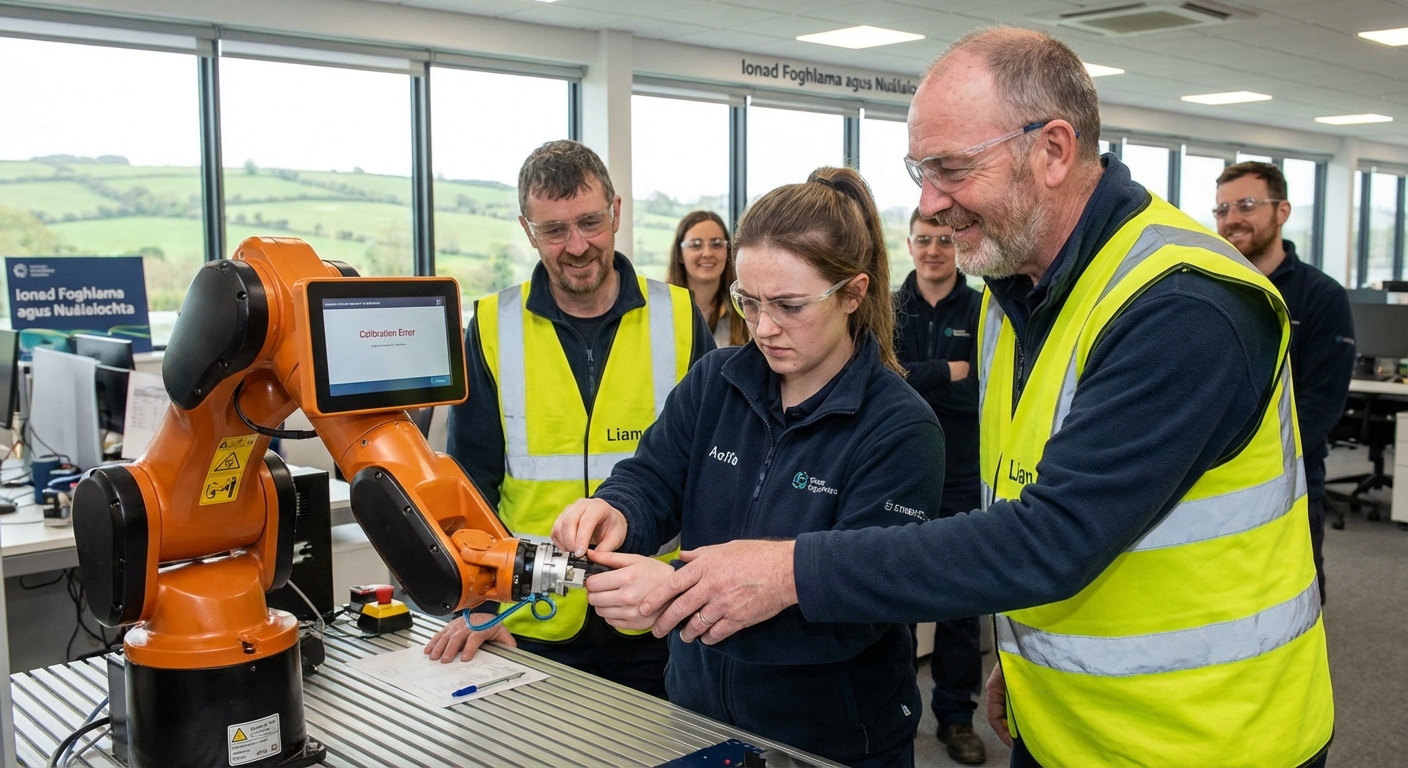
Challenge 1: "I'm not good with technology"
Solution: - Start with simple tasks - Use physical demonstrations, not just screens - Pair with confident colleague - Emphasise that robots are designed to be easy - Celebrate small wins
Challenge 2: "Will this replace my job?"
Solution: - Be honest about intentions - Emphasise job evolution, not elimination - Highlight new skills they'll gain - Show career progression opportunities - Involve staff in implementation decisions
Challenge 3: "It was working fine yesterday"
Solution: - Document changes and troubleshooting - Create simple diagnostic checklist - Establish clear escalation path - Review common issues in team meetings
Challenge 4: Different learning speeds
Solution: - Identify quick learners as peer mentors - Provide written guides for reference - Allow extra practice time - Don't embarrass slower learners - Focus on competency, not speed
Challenge 5: Shift handovers
Solution: - Standardised handover checklist - Log book for robot status - Clear responsibility assignment - Overlap time for handover
Challenge 6: Maintaining skills over time
Solution: - Regular refresher sessions - Include robot topics in team meetings - Update training for software changes - Cross-train for coverage
Ongoing Learning and Development

Monthly:
- Brief refresher on any issues encountered
- Share tips and best practices
- Update on any software changes
- Recognition for good robot management
Quarterly:
- Performance review (robot and team)
- Advanced feature training
- Cross-training opportunities
- Feedback collection
Annually:
- Comprehensive skills assessment
- New feature training
- Career development discussion
- Process improvement workshop
Creating Robot Champions:
Identify and develop "robot champions" who: - Show enthusiasm for technology - Help colleagues with questions - Suggest improvements - Act as first point of contact
Benefits of champions: - Peer support reduces helpdesk calls - Local expertise for quick fixes - Positive influence on culture - Career development opportunity
Resources for Ongoing Learning:
Rentabot.ie provides: - Video tutorials for common tasks - Updated quick-reference guides - Monthly webinars on best practices - Access to user community - Dedicated support for questions
Measuring Training Effectiveness:
Track: - Robot utilisation rates - Issue resolution times - Support ticket volumes - Staff confidence surveys - Customer feedback (if applicable)
Frequently Asked Questions
Frequently Asked Questions
In This Guide
Related Guides

Robot Rental vs Purchase: Making the Right Decision for Your Irish Business
Should you rent or buy a robot? A comprehensive financial analysis to help Irish businesses make the right decision based on their specific circumstances.
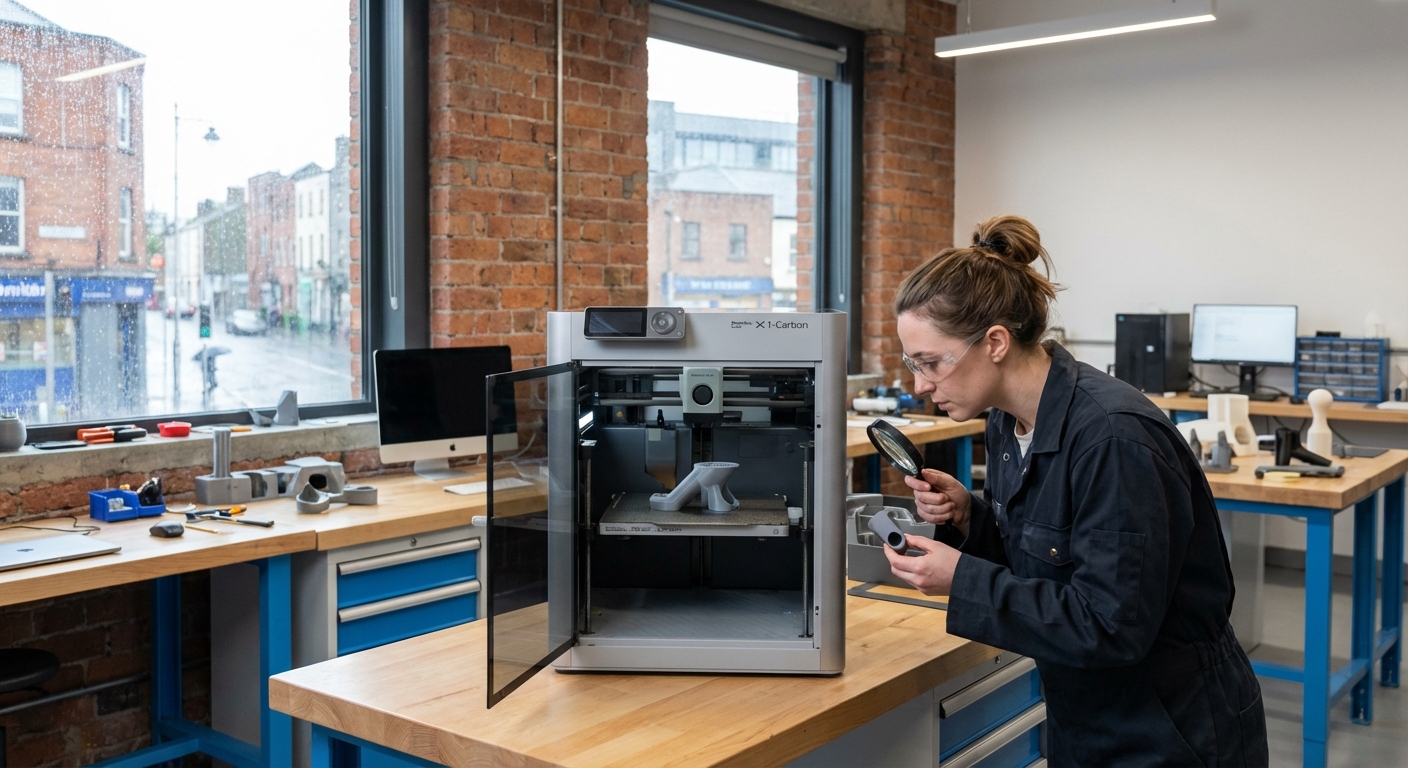
3D Printer Rental for Irish Businesses: Additive Manufacturing Guide
When renting a 3D printer makes sense for Irish businesses. From prototyping to production, understand the costs and benefits of 3D printer rental.

How to Implement Robots in Your Irish Business: Step-by-Step Guide
A practical implementation guide for Irish businesses adopting robots. From initial assessment to go-live, learn how to successfully deploy automation.